Are Tape In Extensions Bad for Your Hair? Damage Explained
Published November 9, 2026
Tape-in extensions offer a convenient way to add volume and length without waiting for your natural hair to grow. However, their adhesive attachment can raise concerns about breakage, thinning, and hair loss. So, are tape in extensions bad for your hair?
Not necessarily. Your risk depends on four factors: the condition of your natural hair, the weight of the extensions, the application technique, and your maintenance routine. Poor placement, excess tension, and incorrect removal can increase the chance of breakage and traction-related hair loss.
Knowing the benefits, risks, and proper care will help you decide if tape-in extensions suit your hair.
How Do Tape-In Extensions Affect Natural Hair?
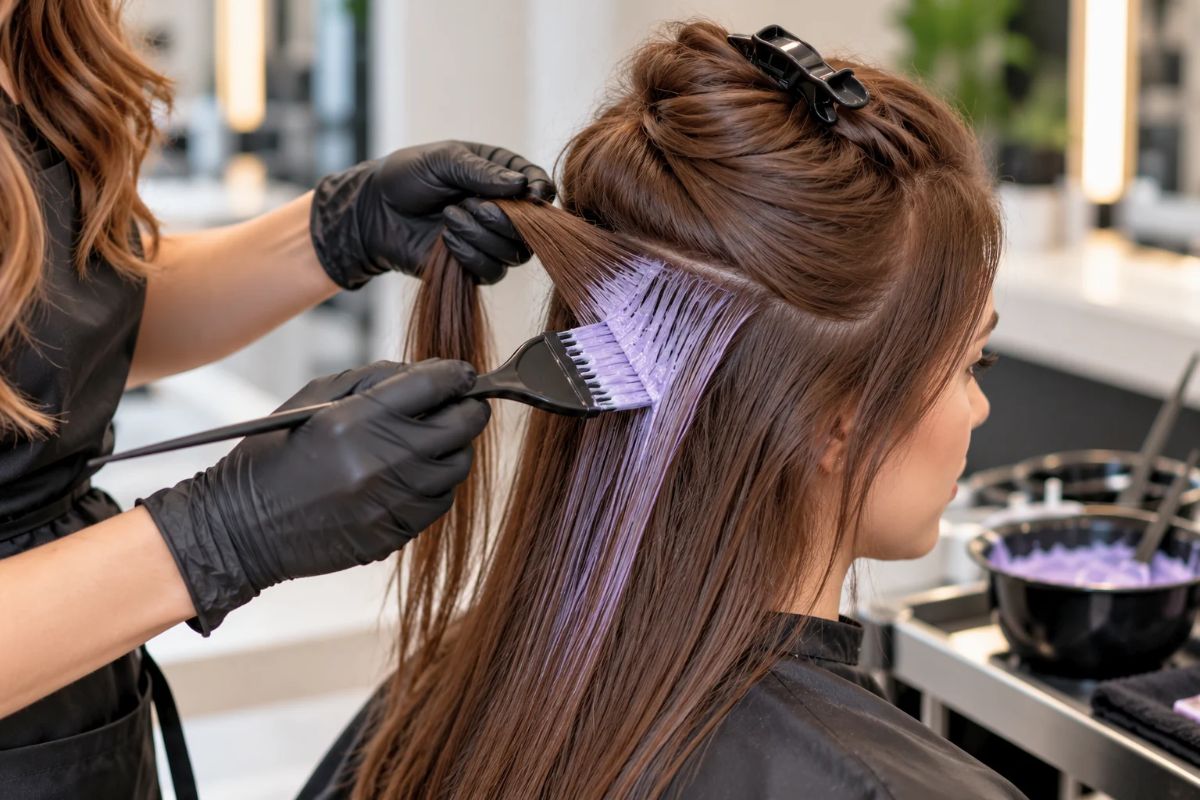
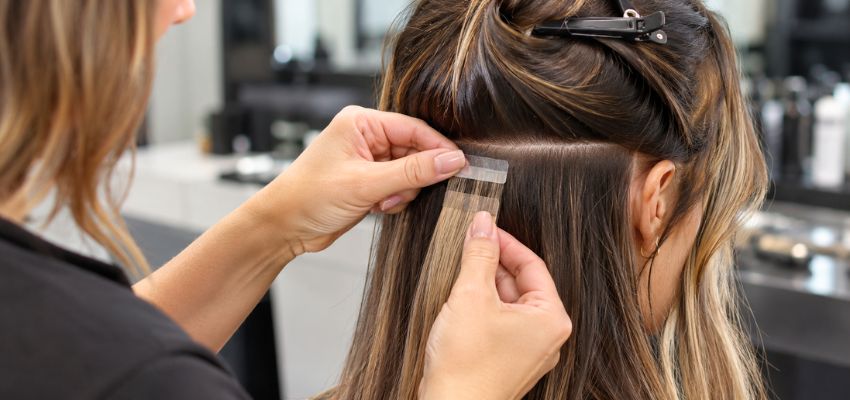
Tape-in extensions use adhesive strips to attach extension hair to natural strands. A stylist usually places a thin section of natural hair between two adhesive wefts. This creates a fairly flat attachment.
This method spreads the added hair across several attachment points. Still, the extra weight can stress natural strands, especially when the extensions don’t suit your hair density or condition.
When Tape-In Extensions May Be Suitable
Tape-in extensions can be suitable when properly selected, installed, and maintained. Their flat construction allows them to blend with natural hair without bulky attachment points.
Before installation, a stylist should assess your hair density, strength, and scalp condition. The attachments should not pull tightly at the roots or place excessive weight on fragile sections.
Follow the recommended maintenance schedule and use compatible hair care products. Both steps help limit damage.
When Tape-In Extensions Can Cause Hair Damage
Problems arise when extensions pull too hard on natural hair or are not maintained properly. Poor placement, excess weight, rough brushing, and improper removal weaken strands and can lead to breakage over time.
Repeated or prolonged pulling can also contribute to traction alopecia, a variant of hair loss due to tension on the hair follicles. Early traction alopecia may improve once the tension is removed. But continued pulling can permanently damage follicles and cause lasting hair loss.
Professional application and the right extension weight can lower these risks but cannot eliminate them completely.
Tape-In Extensions: Pros and Cons
Consider these advantages and drawbacks before deciding whether tape-in extensions are right for your hair.
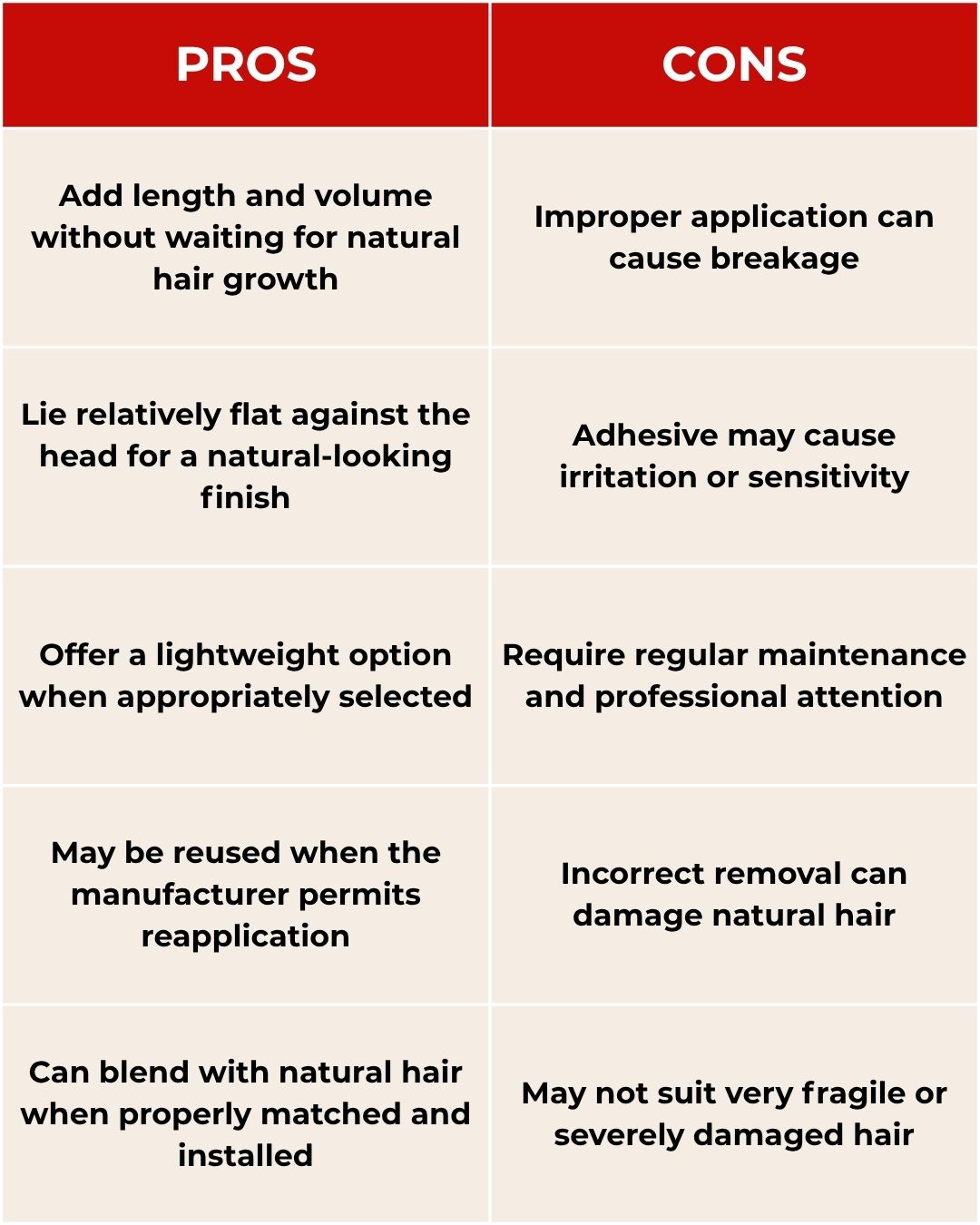
Results depend on the extension system, application technique, natural hair condition, and aftercare. Weight, adhesive formulation, and reuse requirements vary by product.
What Types of Damage Can Tape-In Extensions Cause?
Poor application, excess weight, and constant tension can harm your hair and scalp. These problems can take several forms.
Hair Breakage
Hair breakage happens when weakened strands snap along the shaft. Healthy hair sheds naturally from the follicle. Tape-in extensions can contribute to breakage because natural hair may struggle to support their weight and face repeated pulling around attachment points.
Aggressive brushing, frequent heat styling, and tangling near adhesive bonds worsen the problem. Broken strands may appear shorter, uneven, or frizzy.
Hair Thinning and Traction Alopecia
Traction alopecia develops when repeated or prolonged pulling places stress on hair follicles. Extensions that are too heavy or fastened too tightly can contribute to this condition.
Early signs include thinning around the hairline, broken hairs, and tenderness near the roots. Hair loss may improve when the tension is addressed early. However, continued pulling can cause permanent follicular damage.
The American Academy of Dermatology (AAD) cautions against hairstyles that cause pain or constant pulling. If your extensions feel too tight, call your stylist right away. Don’t wait for your next maintenance appointment.
Scalp Irritation and Adhesive Reactions
Some people experience itching, redness, or discomfort around tape-in attachments. Possible causes include adhesive irritation, scalp tension, product buildup, or sensitivity to an adhesive ingredient.
Persistent redness, swelling, burning, or itching should not be ignored. Contact your stylist about uncomfortable attachments and seek medical advice if symptoms continue or worsen.
What Causes Tape-In Extension Damage?
Several factors can raise the chance of damage. Many can be addressed through proper installation and maintenance.
Improper Installation and Extension Placement
Incorrect placement puts unnecessary stress on natural hair. Attachments placed too close to the scalp pull at the roots. Weak or thin sections may not hold the added weight well.
A qualified stylist should choose suitable attachment points and allow enough room for natural hair movement.
Excessive Tension and Heavy Extensions
Extensions that are too heavy can cause unnecessary strain. Fine or fragile strands may not support the same weight as thicker, stronger hair.
The number, length, and weight of the wefts should match your hair density and condition. Adding more hair does not necessarily produce better results.
Delayed Maintenance and Prolonged Wear
As natural hair grows, tape-in attachments move farther from the scalp, making extensions harder to manage and increasing the risk of tangling around attachment points.
Follow the maintenance schedule recommended by your extension manufacturer and stylist. Regular appointments let your stylist check the attachments and fix any tangling. They can also decide whether the extensions need to be repositioned or removed.
Incorrect Removal Techniques
Pulling, peeling, or forcing adhesive attachments apart breaks natural strands or pulls out healthy hair.
Professional removal is generally safer, particularly if you are unfamiliar with the process. A qualified stylist will use a remover that works with your extension system. They will separate the adhesive bonds carefully and check the condition of your natural hair before reapplying anything.
Who Should Be Cautious About Tape-In Extensions?
Tape-in extensions may not suit everyone. Certain hair and scalp conditions can increase the risk of breakage or additional tension.
- People with fine or fragile hair: Delicate strands may struggle to support added weight. A stylist can assess whether lighter extensions, fewer wefts, or another method would be more suitable.
- People experiencing hair loss or scalp problems: Existing thinning, heavy shedding, or scalp inflammation can get worse with extra tension. See a dermatologist before installation if you have unexplained hair loss or ongoing scalp irritation.
- People with severely damaged or chemically processed hair: Bleaching, relaxing, and repeated chemical treatments can weaken strands. Adding extensions may increase breakage, so have a stylist assess your hair before proceeding.
How to Prevent Tape-In Extensions From Damaging Your Hair
Consistent aftercare can help minimize unnecessary stress on natural hair. The AAD’s guidance on preventing hair damage from extensions also emphasizes careful installation and avoiding excessive tension.
Choose an Experienced Hair Extension Stylist
Look for a stylist experienced in tape-in applications. Discuss your hair density, previous chemical treatments, and desired length and volume during your consultation. Before starting, your stylist should explain how the installation works. They should also cover maintenance needs and how the extensions are removed.
Follow the Recommended Maintenance Schedule
Schedule appointments according to your extension system and stylist’s recommendations. Regular checks help identify loose adhesive bonds, tangling, and attachments that need repositioning. Do not wait until extensions are severely tangled or uncomfortable.
Use Appropriate Hair Care Products
Choose shampoo and conditioner suitable for your hair and extension system. Do not apply heavy oils or conditioners directly to adhesive bonds if the manufacturer advises against it. These products can weaken the adhesive. Follow your stylist’s product recommendations to care for both your natural hair and extensions.
Brush and Style Gently
Use an extension-compatible brush and detangle from the ends upward. Hold your hair near the roots while brushing to reduce pulling on attachment points. Limit excessive heat styling and avoid hairstyles that place additional tension on the roots.
Protect Your Extensions While Sleeping
Gently detangle your hair before bed and loosely braid it to reduce tangling. A satin or silk pillowcase can also help minimize friction. Avoid sleeping with wet or tangled extensions, which can make matting harder to manage.
What Are the Warning Signs That Tape-In Extensions Are Damaging Your Hair?
Watch for these potential signs of excessive tension or damage after installation:
- Persistent tenderness: Pain, headaches, or pulling sensations may indicate excessive tension.
- Excessive breakage: Short or broken strands around attachment points may suggest stress on natural hair.
- Hairline thinning: Receding edges or thinning near the roots may indicate traction-related damage.
- Tangling or matting: Persistent tangles around adhesive bonds can make brushing and removal more difficult.
- Scalp irritation: Ongoing redness, itching, swelling, or burning may indicate irritation or adhesive sensitivity.
If your extensions feel painful or excessively tight, contact your stylist promptly. Do not pull or forcibly remove the attachments yourself.
See a doctor if you have scalp inflammation that doesn’t go away. The same applies to significant hair loss or thinning that continues after the extensions are removed. A dermatologist can check for traction alopecia or another hair or scalp condition.
Frequently Asked Questions
Do tape-in extensions cause hair loss?
Tape-in extensions do not cause hair loss automatically. However, excessive tension, improper placement, and prolonged wear can cause traction alopecia. Proper application and timely maintenance reduce this risk.
Can tape-in extensions damage thin hair?
Yes. Added weight can stress fine or fragile strands. A stylist should assess your hair density and recommend a suitable extension weight or alternative method.
Do tape-in extensions pull out your natural hair?
They can pull out or break natural hair if removed incorrectly or when adhesive bonds tangle. Naturally shed hairs may remain trapped between attachments until removal. Professional removal minimizes unnecessary pulling.
How long does it take for hair to recover from extension damage?
Recovery depends on the type and severity of damage. Broken strands cannot be repaired and must grow out. Temporary shedding or early traction hair loss may improve once the tension source is removed.
Prolonged traction can cause permanent follicular damage and lasting hair loss. Consult a dermatologist if thinning or excessive shedding continues after removing the extensions.

Making the Right Choice for Your Hair
So, are tape in extensions bad for your hair? Not necessarily. When properly chosen, installed, and maintained, tape-ins add length and volume without damaging your natural hair. But too much tension, poor upkeep, or incorrect removal can increase the risk of breakage and hair loss.
Before installation, consult an experienced stylist to determine whether your hair can support the added weight. For more hair care tips, styling guidance, and professional beauty resources, visit Salon Suites of Palm Beach.
Lease Salon Space In Royal Palm Beach Florida
Fulfill your dreams and be your own boss when you lease salon space in Palm Beach Florida with us. Our beautiful salon spaces come with complimentary laundry and cleaning services and a flexible lease agreement you can afford. Our salon suites come with many amenities including free cleaning service, televisions, storage space, and more. Contact us now to book a tour or learn more.

Fact Checked By Experts
Our team of internal experts diligently fact-checked this content to ensure accuracy and reliability. Find detailed information about the rigorous editorial standards we uphold for our website.

About The Author
Hi, I’m Corinne Grace, a nursing graduate from Riverside College and a passionate fan of the beauty industry. Through my professional background and experience, I write to help independent stylists and beauty entrepreneurs run healthier and more profitable businesses.