Bleaching Hair Level Chart: How Light Can Hair Go?
Published October 30, 2026
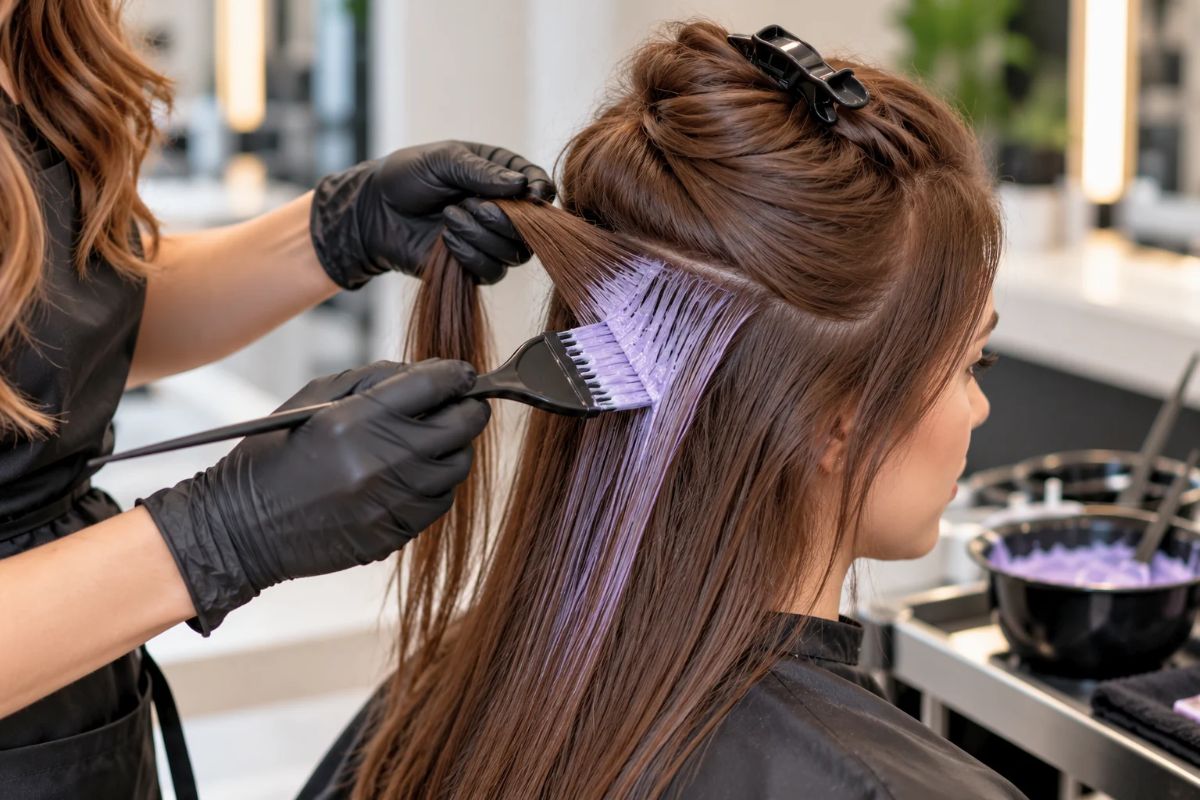
Going from dark brown hair to platinum blonde involves more than applying bleach. Your starting hair color, underlying pigments, previous chemical treatments, and hair condition all influence how much lift you can achieve.
A bleaching hair level chart shows how hair changes from dark shades to blonde as bleach removes pigment. It also explains why red, orange, and yellow tones appear during the process. Compare the levels with bleaching stages to estimate how much lightening your desired shade needs. It can also indicate whether you may need more than one session.
What Is a Bleaching Hair Level Chart?
A bleaching hair level chart shows how hair color ranges from dark brown and black to blonde as pigment is removed. Colorists use these levels to describe how light or dark the hair is and estimate how much more lightening may be needed to reach a particular shade.
Many professional hair color systems use a scale from level 1 (black) to level 10 (lightest blonde). Although the numbering is widely used, exact shade descriptions can vary by brand. Treat the scale as a general reference rather than a universal standard.
Hair Level vs. Hair Tone
Hair level and hair tone describe two different aspects of color. Hair level indicates how light or dark the hair is. Hair tone describes the underlying color quality, such as warm, cool, or neutral.
For example, two people may have level 9 hair, but one may have a golden blonde tone while the other has a cooler ash blonde finish. Both have similarly light hair, but their tones differ.
This difference matters during bleaching. Hair level determines how light the hair gets, while tone shapes its final look. Lightener removes natural or artificial pigment to lift the hair, while toner adjusts the resulting shade. Reaching the correct level is often necessary before a toner can produce the intended color.
Bleaching Hair Level Chart: Levels 1-10 Explained
The bleaching hair level chart below groups hair levels 1-10 by approximate shade. It also shows the underlying warmth that may appear as your hair lightens. Use it to compare color depth and understand the stages your hair may pass through. Actual results vary with starting color, previous treatments, and the lightening process.
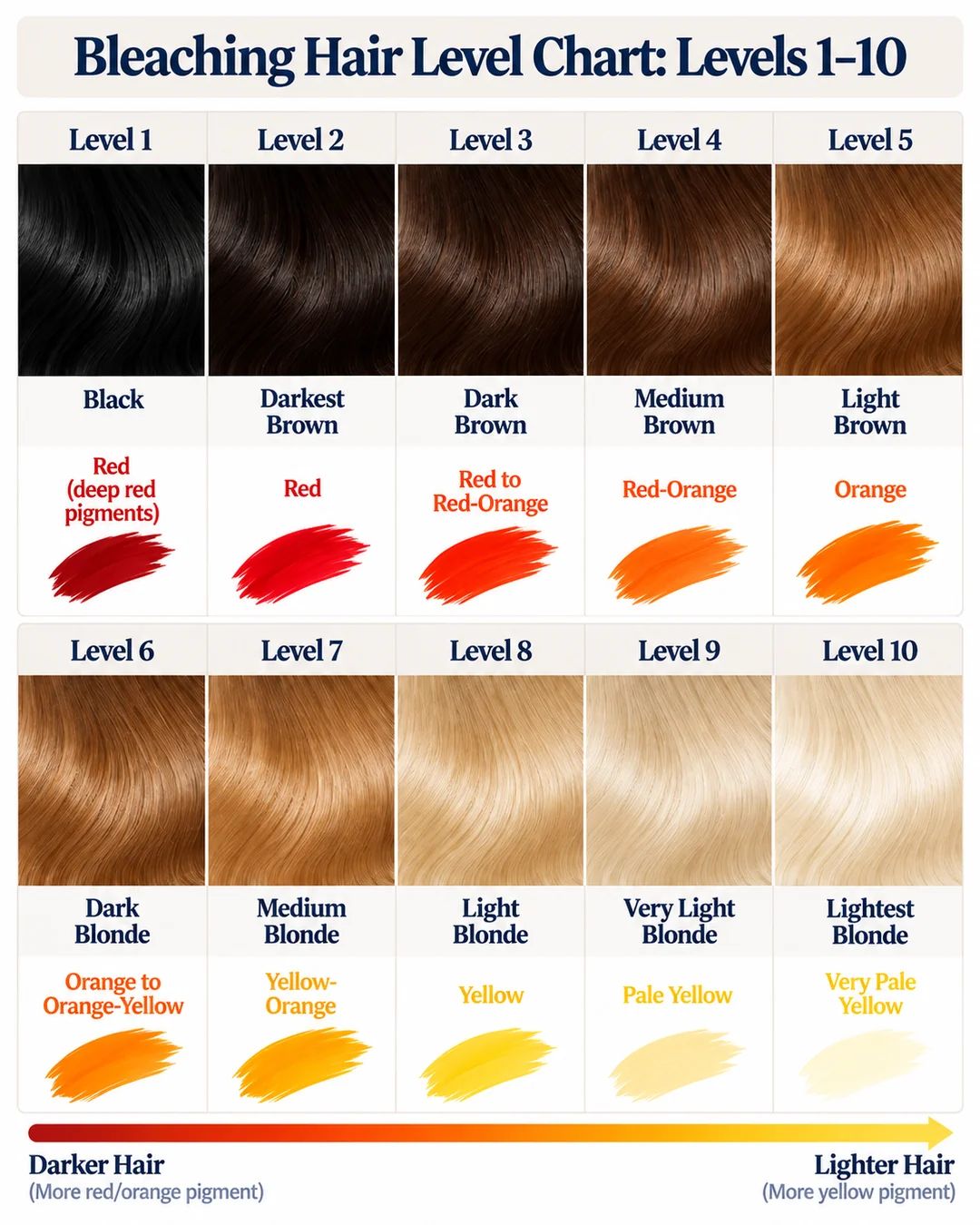
Levels 1-3: Black to Dark Brown
Levels 1-3 represent the darkest hair colors.
- Level 1: Black
- Level 2: Very dark brown
- Level 3: Dark brown
Dark hair generally requires more lifting to reach blonde shades than lighter hair. The process is more involved when the goal is platinum or pale blonde.
Levels 4-6: Medium Brown to Dark Blonde
Levels 4-6 cover medium brown through dark blonde.
- Level 4: Medium brown
- Level 5: Light brown
- Level 6: Dark blonde
Hair at level 6 generally requires less lightening to reach lighter blonde shades than hair at level 2 or 3. Previous color treatments can affect how evenly the hair lightens and the results achievable.
Levels 7–8: Medium to Light Blonde
Levels 7–8 represent medium blonde to light blonde.
- Level 7: Medium blonde
- Level 8: Light blonde
Depending on the remaining warmth and desired finish, hair at these levels may be suitable for golden, beige, or some ash blonde shades.
Levels 9–10: Very Light Blonde to Pale Blonde
Levels 9–10 represent very light blonde shades.
- Level 9: Very light blonde
- Level 10: Lightest blonde or pale blonde
Level 9 represents a very light blonde, while level 10 is the lightest blonde range in many professional color systems. Pale yellow pigment may remain at these levels, depending on the starting color and lightening process.
Levels 9–10 can provide a base for platinum or icy blonde shades, but reaching level 10 does not automatically produce white hair. The final color depends on the remaining pigment, toner formula, and hair condition. A colorist can determine whether additional lightening is necessary and safe.
What Are the Different Stages of Bleached Hair?
During bleaching, hair generally passes through warmer underlying shades as its pigments are lightened. Darker hair may reveal red or orange tones, while further lightening can expose yellow and pale yellow pigments.
The stages may look different depending on your starting hair color, previous dye jobs, and how much the hair has lightened. These underlying tones can help indicate whether the hair is ready for the next stage of coloring.
Red and Red-Orange
Dark brown and black hair often reveals reddish or red-orange pigments during the early stages of lightening.
If your hair looks coppery or reddish after bleaching, it does not mean the process was unsuccessful. It may indicate the hair has not reached the level needed for your desired blonde shade.
Visible warmth alone cannot tell you whether your hair is ready for another bleaching session. Its condition must also be assessed.
Orange and Yellow-Orange
As lightening progresses, red-orange pigments can shift toward orange and yellow-orange.
These stages are common when lifting medium brown hair or lightening darker hair that has not reached blonde. Orange tones can remain after an initial bleaching session if the hair needs more lift to reach the target level.
Toner can refine the tone once the hair is light enough for the intended shade. It cannot turn orange hair into pale platinum. The hair needs more lightening first.
Yellow and Pale Yellow
As hair becomes lighter, the remaining underlying pigment typically shifts toward yellow. Depending on the hair’s level, yellow may suit golden or beige blonde shades. Pale yellow can be a starting point for very light blonde or platinum finishes.
Cooler blonde results generally require toning to neutralize unwanted warmth. The appropriate formula depends on the hair’s underlying pigment and desired shade. Not every head of hair can safely reach pale yellow. If the hair is severely compromised, a darker blonde may be a better option.
How Light Can Your Hair Go With Bleach?
How light your hair can become depends on its starting color, previous chemical treatments, and condition. Some hair can reach a very light blonde shade in fewer sessions, while other hair needs more gradual lightening or a less demanding shade.
Your hair’s condition should take priority over achieving a specific blonde color.
Why Starting Hair Color Matters
Your natural roots provide a starting reference when estimating your hair level. Previously colored lengths may have a different color depth from new growth. A colorist should assess these areas separately because they may respond differently during lightening.
Why Dark Hair May Need Multiple Sessions
Dark hair often needs more than one bleaching session to reach a very light blonde. This is especially true for platinum or icy blonde.
A colorist may recommend a gradual approach to limit damage. The time between appointments depends on the hair’s condition and the professional’s assessment, not a fixed schedule.
Multiple sessions are not always needed. A single session is not safe just because the hair lightens quickly. The decision to continue bleaching should depend on the hair’s condition.
Can All Hair Reach Platinum Blonde?
No. Platinum blonde may be possible for many people. The process does not suit every starting color or hair condition.
Hair that has been bleached repeatedly, permanently colored, chemically straightened, or processed may break more easily. Additional lightening can worsen existing damage.
A professional colorist can assess your hair and discuss realistic expectations. If your desired shade is unlikely to be safe, they can also recommend a better alternative.
What Affects How Light Your Hair Can Get?
Your starting color, previous chemical treatments, and hair condition affect how your hair responds to bleach. A level chart offers a general reference but cannot predict the exact result on your hair.
Natural Hair Color and Starting Level
Your natural hair color determines how much lightening you need. Roots and lengths often differ in color depth, affecting how evenly your hair lifts. A professional can spot these differences and recommend the right lightening approach.
Previous Hair Dye and Chemical Treatments
Hair that has been colored before often reacts differently to bleach. Virgin hair has never been chemically colored, so it tends to behave more predictably.
Permanent dye, box dye, direct dyes, and other chemical treatments affect how lightener works. Some artificial pigments may be difficult to remove evenly, and the hair may have varying damage along its length.
Be honest with your colorist about your hair history, including previous bleaching, coloring, and chemical straightening. This helps them plan the service and assess risks.
Hair Condition and Porosity
Hair condition influences how well strands tolerate chemical processing. Past bleaching, coloring, and chemical services can make hair drier and more prone to breakage.
Porosity affects how hair absorbs and holds color. This can lead to uneven results or toning that is hard to predict.
Warning signs calling for professional assessment include excessive breakage and rough or fragile texture. Another sign is strands that stretch unusually or fail to regain shape when wet.
Conditioning products can make hair easier to manage. They cannot reverse all structural damage caused by chemical processing. If your hair is significantly compromised, postponing further bleaching may be safer.
Bleach Formulation and Processing
Lightener type, developer strength, application technique, and processing time shape the result. Together, they determine how much the hair lifts and whether the color is even. Using a stronger formula or leaving bleach on longer does not guarantee better results and may increase damage risk.
Previously lightened lengths and darker roots may react differently. This makes application technique especially important. Follow the product’s directions and processing limits. If your hair has not reached the desired level, do not leave bleach on longer than recommended. Do not reapply it until you have checked your hair’s condition.
How Does Toner Affect Bleached Hair Color?
Toner adjusts the warmth of lightened hair to create a more balanced shade. Violet-based formulas typically counter yellow tones, while blue-based formulas can help neutralize orange tones. The formula should match the hair’s current level, underlying pigment, and intended color.
Unlike bleach, toner does not provide the substantial lightening needed to move hair from a darker level to pale blonde. If your hair remains too dark or orange for platinum, additional lightening may be necessary, provided the hair can tolerate it.
A colorist can assess whether your hair is ready for toning and select a formula suited to its underlying pigment.
Frequently Asked Questions
How many levels can bleach lift hair?
How much bleach can lighten your hair depends on the product, developer, starting color, application technique, processing conditions, and hair history. Some lighteners provide more lift than others, but results vary depending on the hair. Your colorist can estimate the likely lift and determine whether the target shade is achievable without excessive damage.
Can dark hair reach level 10 in one session?
Some hair can lighten a lot in one session. Reaching level 10 from very dark hair is not realistic for everyone. The number of sessions depends on starting color, previous treatments, and hair condition.
What hair level is needed for platinum blonde?
Platinum blonde usually needs hair lifted to a very light blonde. This is often around level 9 or 10. The exact level depends on the shade and the color system. The underlying pigment must also be suitable for the intended toner. A colorist can assess whether the hair is light enough to achieve a platinum finish.
Why does bleached hair turn orange or yellow?
Bleaching exposes underlying pigments as hair lightens. Darker hair may reveal red or orange tones first, followed by yellow and pale yellow as the lightening process progresses.
Can toner make bleached hair lighter?
No. Toner mainly changes the tone of lightened hair. It does not make hair much lighter. If your hair is too dark for the desired blonde shade, additional lightening may be necessary before toning.
How do I know if my hair is too damaged to bleach again?
Signs of damage include constant brittleness, frequent snapping, and a rough texture. Strands that stretch unusually when wet are another warning sign. Uneven texture or significant breakage after previous bleaching also warrants caution.
A professional assessment is advisable before another lightening session. If your hair is severely damaged, more bleaching may cause breakage. A darker shade or a different color technique may be a better choice.
Choose the Right Bleaching Hair Level
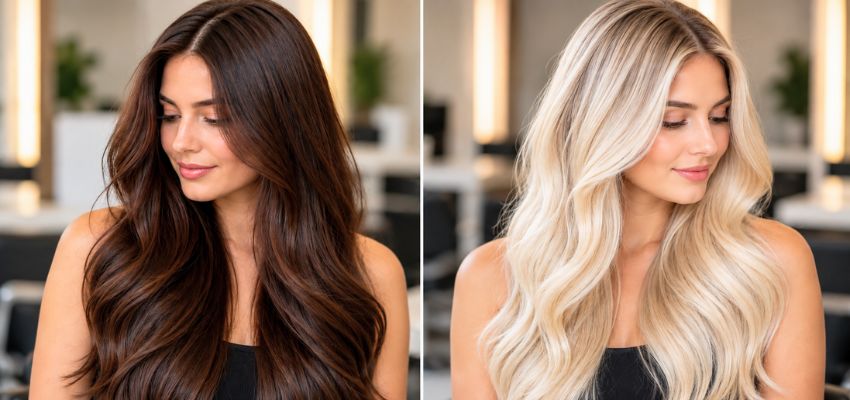
A bleaching hair level chart gives you a reference for comparing your current hair color with the blonde shade you want to achieve. However, your hair’s history and condition will determine how much lightening it can tolerate.
Before bleaching your hair, ask a qualified colorist to assess its condition and explain what results are realistic. They can also recommend a bleaching plan that takes your hair’s needs into account. Visit Salon Suites of Palm Beach for additional educational resources on hair coloring and salon services.
Lease Salon Space In Royal Palm Beach Florida
Fulfill your dreams and be your own boss when you lease salon space in Palm Beach Florida with us. Our beautiful salon spaces come with complimentary laundry and cleaning services and a flexible lease agreement you can afford. Our salon suites come with many amenities including free cleaning service, televisions, storage space, and more. Contact us now to book a tour or learn more.
Fact Checked By Experts
Our team of internal experts diligently fact-checked this content to ensure accuracy and reliability. Find detailed information about the rigorous editorial standards we uphold for our website.

About The Author
Hi, I’m Corinne Grace, a nursing graduate from Riverside College and a passionate fan of the beauty industry. Through my professional background and experience, I write to help independent stylists and beauty entrepreneurs run healthier and more profitable businesses.